
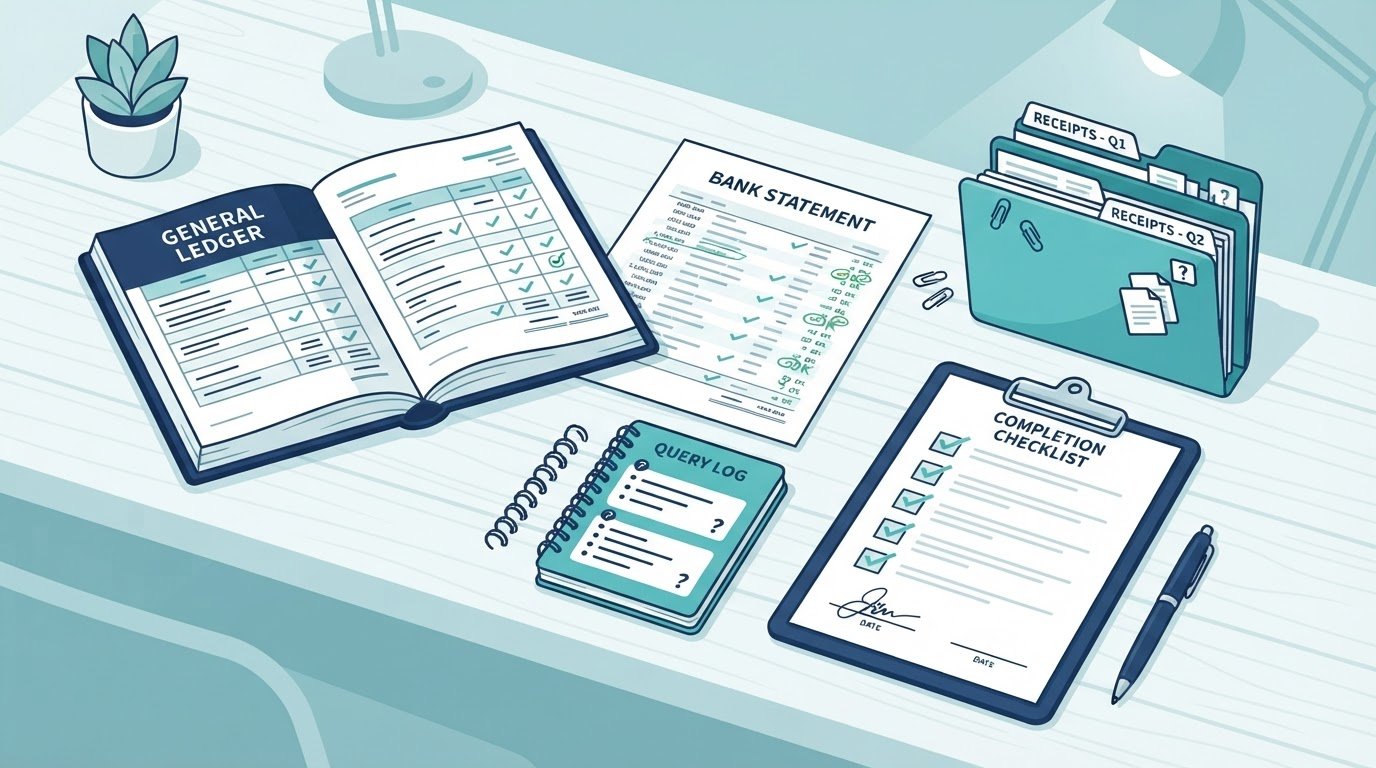
Direct answer: A catch-up handover should state exactly which periods and accounts were completed, what was reconciled, which assumptions were used and which issues remain open. It should also transfer source records and access securely so the next person can continue without guessing.
This general guide is for Australian small-business owners, including businesses in Epping, Melbourne and Victoria. It is not personal tax, legal or employment advice.
How should the catch-up scope be recorded?
List the legal entity, accounting file, start and end dates, bank and card accounts, sales, purchases, payroll interfaces, loans and any lodgment-related work. Distinguish completed bookkeeping from items that still require owner, accountant or registered tax agent decisions.
Which reconciliations should be handed over?
Provide the reconciliation date and supporting balance for each bank, card, payment gateway, debtor, creditor, payroll clearing, tax and loan account reviewed. An account showing “reconciled” in software is not enough if the opening balance, missing statement or duplicated transaction remains unresolved.
What belongs in the open-issues log?
Record each missing document, unclear payment, duplicate, old balance, private transaction or coding question. Give it an owner, materiality or priority, the evidence requested and the next action. Do not conceal an unresolved item by posting a balancing journal without support.
What should the handover checklist include?
- Entity, file, periods and agreed scope.
- Accounts reconciled and supporting statements.
- Outstanding invoices, bills and credit notes.
- Payroll, GST and tax-control balances requiring review.
- Open queries, assumptions and correction history.
- Secure access transfer and user-permission review.
- Backup or export location and record-retention owner.
- Final review, sign-off and next due dates.
How should access and records be transferred?
Use named users and appropriate permissions instead of sharing passwords. Remove access that is no longer needed. Transfer bank statements, invoices, workpapers and query logs through an agreed secure method, while keeping business records readable and retrievable for the required period.
What could this look like in practice?
Hypothetical example: A Melbourne retailer catches up six months of records. The handover shows all bank accounts reconciled to 31 October, lists three missing supplier invoices, flags a payroll clearing difference for review and names the owner responsible for each item.
Where does this fit in the wider process?
Use the live bookkeeping clean-up and control guide, review our Bookkeeping service information, and visit the TNS Accounting homepage.
Frequently asked questions
Is a software backup enough for a handover?
No. The next person also needs scope, supporting records, reconciliation evidence, open queries and an explanation of significant corrections.
Should every old difference be written off?
No. Investigate the source and obtain appropriate approval or advice before correcting or writing off a balance.
Who should sign off the handover?
The responsible business owner should confirm the scope and unresolved items; specialised accounting, tax or payroll matters may need an appropriately qualified adviser.
Which official sources were checked?
Published by TNS Accounting. Official sources checked 20 November 2026. Rules and software features can change; check the linked sources before acting.







2 Responses