
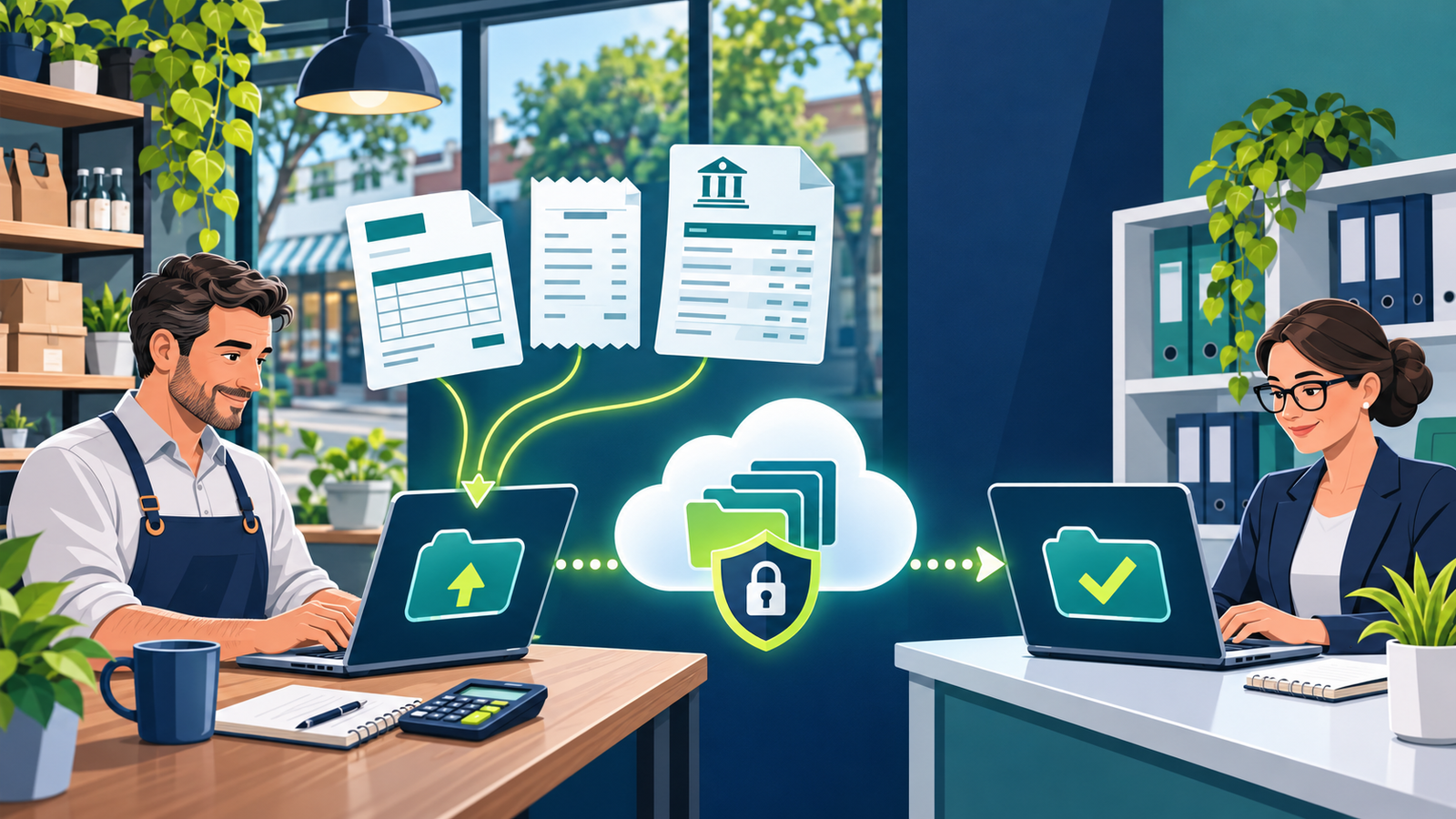
Direct answer: An Epping small business should send its bookkeeper the source records and explanations needed to understand that week’s transactions: sales invoices, supplier bills, receipts, bank and card evidence, payment-platform reports, payroll changes, loan or asset documents and answers to open questions. Entering a transaction in software does not remove the need to retain the original record.
This general guide is for Australian small-business owners, including Epping, Melbourne and Victoria. Confirm current rules and product settings for your circumstances.
Which sales and customer records should be included?
Provide issued invoices, credit notes, refunds, cash or point-of-sale summaries and evidence for unusual deposits. Match payment-platform settlements to the sales period and fees rather than treating the net bank deposit as the complete sales record.
Which purchase and payment records are needed?
Send supplier invoices, receipts, subscriptions, card purchases, reimbursements and documents for assets, loans or leases. Identify private or mixed-use items so the business portion can be supported rather than guessed.
What should be supplied for bank and payroll activity?
Keep bank, card and merchant statements accessible and explain transfers, owner drawings and cash movements. For payroll, provide approved hours, leave and employee changes through the agreed secure process; employment records are confidential.
How should weekly questions and approvals be handled?
Use one exception list showing transaction, question, evidence needed, owner and due date. Approve supplier payments or coding decisions through named users, not shared passwords or scattered messages that cannot be traced later.
How should records be stored and transferred?
Use a controlled cloud folder, document-capture tool or accounting-software attachment process. The ATO accepts clear digital reproductions, but the business must keep records accessible, protected from change and identifiable if requested.
What belongs in the practical checklist?
- Sales invoices, credits and refund evidence
- Supplier bills and expense receipts
- Bank, card and merchant records
- Cash, transfers and owner transactions explained
- Payroll inputs and employee changes
- Loan, lease and asset documents
- Open-question register with due dates
- Secure upload completed and source retained
What could this look like in practice?
Hypothetical example: A hypothetical Epping café uploads weekly supplier invoices, the point-of-sale settlement report and approved timesheets every Friday. The owner also explains two card purchases in one exception list. The example is invented and does not describe a client.
What do business owners ask?
Must every receipt be printed?
No. Clear digital copies can be acceptable when they meet record-keeping rules and remain accessible.
Can a bank feed replace a supplier invoice?
No. A bank line shows payment movement but may not contain the source details needed to support the transaction.
Should payroll records use the same open folder as receipts?
Not usually. Restrict confidential employee information to authorised people and an appropriate secure location.
Where can you continue?
Read the live parent guide, review service information, and explore the TNS Accounting homepage.
Which official sources were checked?
- ATO: overview of record-keeping rules
- ATO: digital record keeping
- ATO: when to do record-keeping tasks
Published by TNS Accounting. Official sources checked 20 November 2026. Rules, guidance and software features can change; confirm the linked sources before acting.







One Response