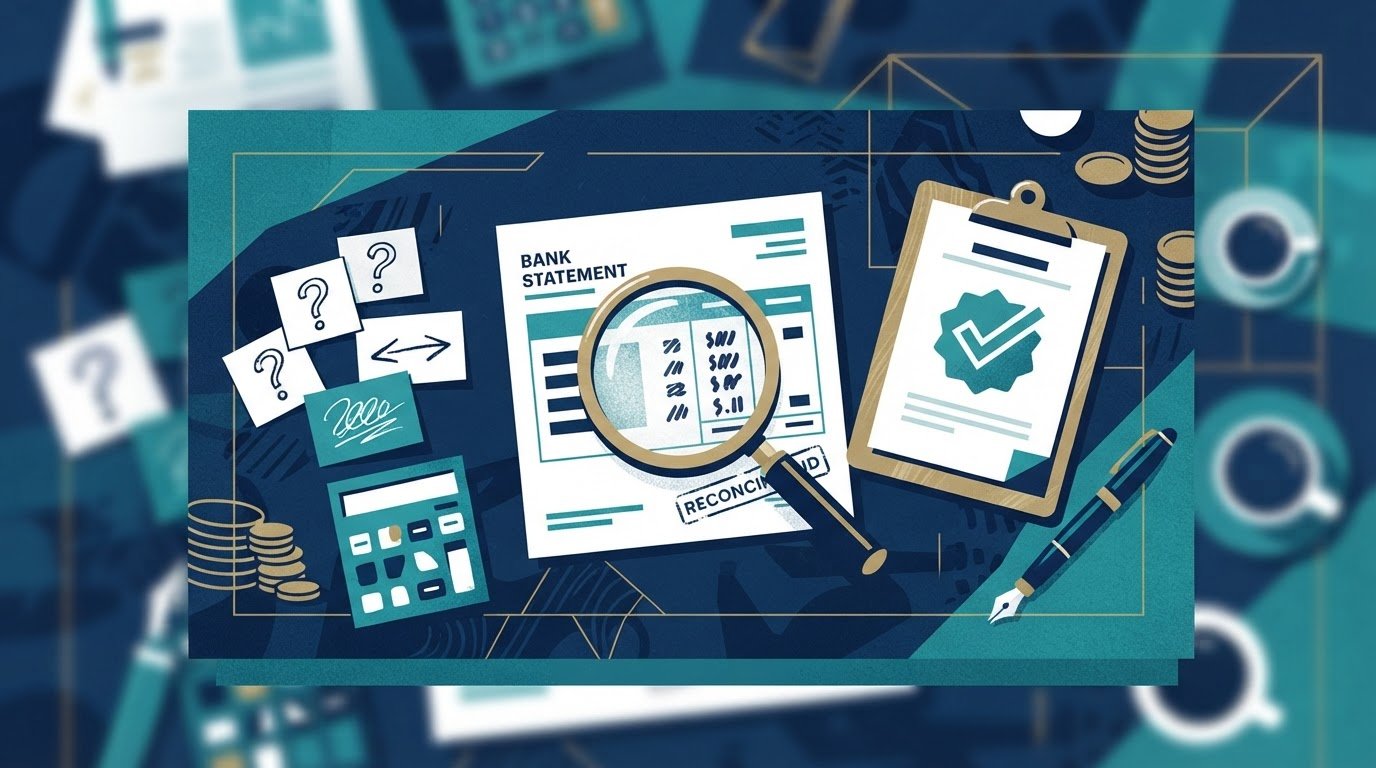
Direct answer: Agree acceptance tests before the work begins, then check reconciliations, supporting documents, correction approvals and unresolved items. A tidy dashboard or zero unreconciled bank lines alone does not establish that the books are complete.
General information for Australian small-business owners, with practical context for Epping, Melbourne and Victoria. Individual treatment depends on records, current rules and circumstances.
What should the agreed acceptance tests cover?
Name the entity, periods, accounts and transaction streams included. Define the evidence needed for each account: statements for banks and cards, customer and supplier detail, loan schedules and payroll or tax-control reconciliations. Record exclusions so an owner does not mistake a limited clean-up for a complete review.
Which bank and balance checks are useful?
Match the statement date and actual bank balance to the software statement balance. Review missing or duplicate statement lines and unexplained reconciling items. Then check significant receivable, payable, clearing, payroll, tax and loan balances against supporting schedules. Resolve the cause of a difference before posting a balancing entry.
How should sample transactions be tested?
Choose transactions from both source documents and ledger reports. Trace the date, amount, business purpose, account, GST treatment and payment. Include a refund, credit note, unusual purchase and transaction around period end. A sample can reveal problems but is not a guarantee that every transaction is correct.
What belongs in the completion checklist?
- Compare delivered work with the agreed scope.
- Check reconciliations and supporting balance schedules.
- Trace selected entries to source documents.
- Review corrections and approvals in closed periods.
- Confirm missing records and assumptions are visible.
- Check impacts on lodged statements with the appropriate adviser.
- Assign every remaining issue an owner and next date.
- Obtain a written handover and sign-off.
When can work be accepted with open items?
Some evidence may remain unavailable or a decision may sit with the owner or adviser. Accept the completed portion only when the open items, effect on reports and responsibilities are clear. Label provisional reports and avoid describing the whole file as final while a material issue remains unresolved.
What could this look like in practice?
Hypothetical example: An Epping retailer receives a clean-up report showing all bank lines matched. The owner’s acceptance test finds an old payment-gateway balance and missing supplier credits. The handover records those exceptions and the report remains provisional until their effects are understood.
Where does this fit in the wider process?
Use the live parent guide, review our service information, or visit the TNS Accounting homepage. For a related next step, read the bookkeeping catch-up handover checklist.
Frequently asked questions
Does a zero suspense balance prove completion?
No. It may mean amounts were moved elsewhere. Review the supporting entries and explanations.
Should an owner review every transaction?
The review should fit risk and materiality. Significant or unusual balances deserve direct evidence, with appropriate professional review where needed.
Is a handover the same as acceptance testing?
The handover transfers information. Acceptance testing checks the delivered work against the agreed evidence and scope.
Which official sources were checked?
Published by TNS Accounting. Official sources checked 20 November 2026. Rules and software features can change; check the linked sources before acting.