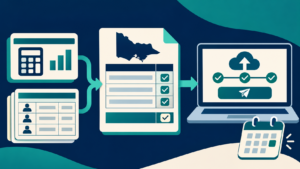
Set a date for each close task and show which work must finish before another step starts. Assign a reviewer and an escalation point for overdue items.
What should be scheduled before reporting?
Allow time for statements, supplier bills and payroll records to arrive. Schedule reconciliations before preparing financial reports and keep time for review.
How do you handle a late source document?
Log what is outstanding, who is retrieving it and whether it affects the numbers. Agree how the delay will be reflected before distributing the pack.
What does this look like in practice?
Hypothetical example. A business plans to close by the fifth working day. Its bank reconciliation finishes on day two and the owner reviews outstanding exceptions on day four.
What should you check?
- List tasks and dependencies
- Assign owners and backup reviewers
- Record delays and decisions
Frequently asked questions
Should every account close on the same day?
Sequence work according to when reliable records are available and which reports depend on it.
For a broader view, read What Accounting Support Does a Small Business Actually Need?. See also How Should You Set Up Financial Records for a New Australian Business?. Explore General Accounting services or visit the TNS Accounting homepage.
Sources
Published by TNS Accounting. Sources checked 13 November 2026.