
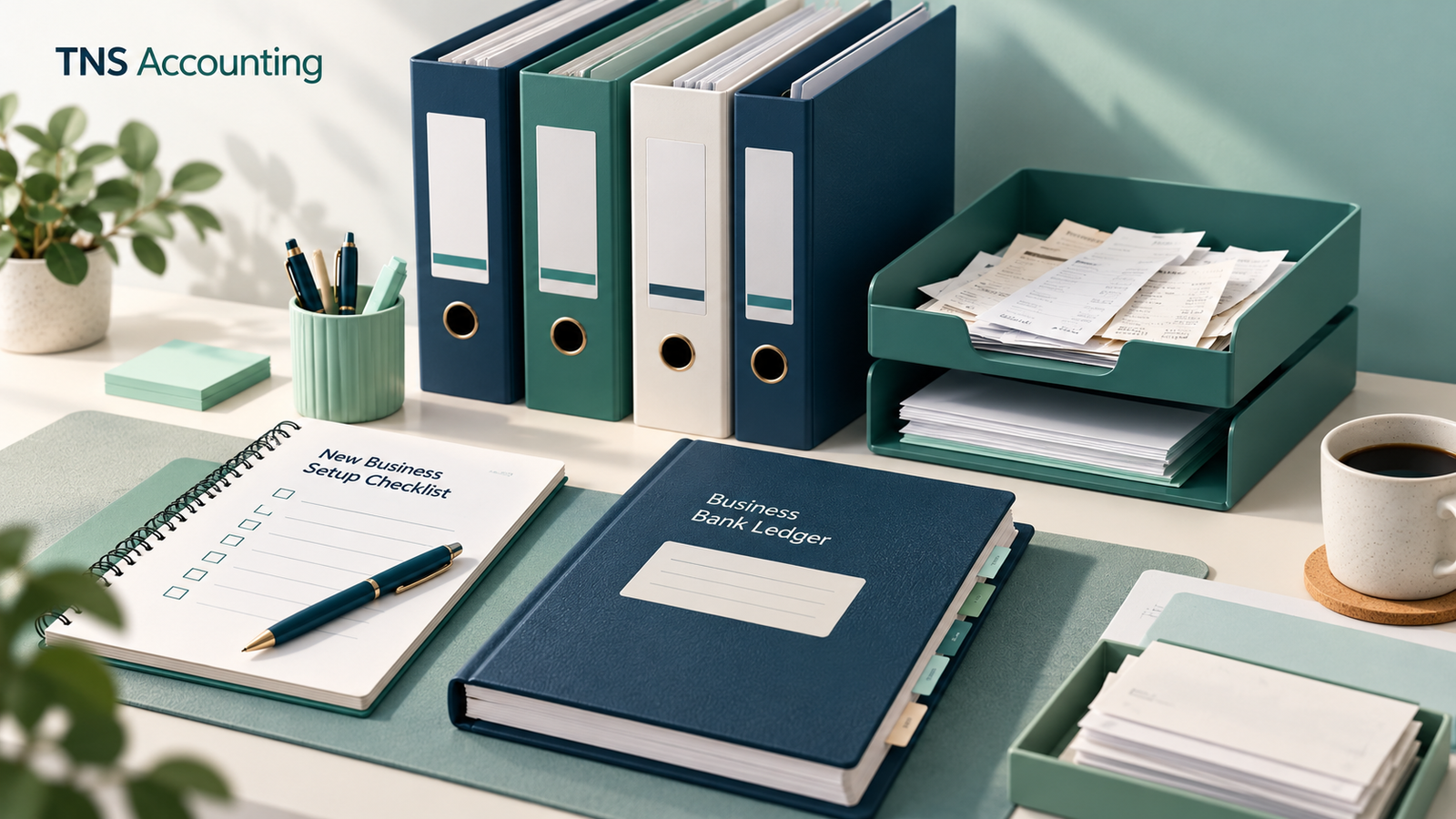
Set up your financial records before transactions become difficult to explain. Start with the business structure, the bank accounts used, the documents that support each transaction and the person responsible for checking them. A simple routine used consistently is more useful than a complex system nobody maintains.
Published by TNS Accounting. Sources checked 31 October 2026. General information for Australian small business owners; individual circumstances and current rules need to be confirmed before acting.
What should you decide before choosing software?
Write down what the business needs to record: customer invoices, supplier bills, owner contributions, equipment purchases, loans and, if relevant, employee payments. Then decide which person enters each item and who checks it. Software should support this workflow rather than determine it. A café receiving daily card settlements has different record-handling needs from a consultant sending a few invoices each month.
Does every business need a separate bank account?
The answer depends on structure. Australian Government guidance distinguishes sole traders from partnerships, companies and trusts. A sole trader is not generally required to open a separate business account, although separating transactions makes review easier; separate accounts are required for the other listed structures for tax purposes. Confirm the arrangement for your own entity before moving funds or opening accounts.
Which records should you collect from the beginning?
Keep clear source documents for income, purchases, assets, finance and relevant employee or contractor payments. Build a document index that connects an invoice or receipt to its transaction. A bank description alone may not explain the business purpose of a purchase. Record missing information as an open query rather than guessing. Retention requirements differ by record type, so do not apply one deletion date to everything.
How should an owner review the first month?
Compare the accounting records with bank and card statements. Check that opening balances have evidence, transfers are not treated as sales, and personal payments are identified. Review unpaid invoices, unpaid bills and upcoming commitments. Ask what each report is intended to help you decide: collecting a debt, reducing a cost or reserving cash for an obligation.
What can an Epping business prepare for a setup discussion?
Bring the entity name, registration details, bank and card statements, existing spreadsheets, software access arrangements and a description of your sales process. Describe any payroll or inventory requirements. Contact TNS Accounting in Epping to discuss the setup work required and whether remote support is suitable for your business.
Which steps should you include in your checklist?
- Confirm the entity and who owns each account.
- Separate business and private transactions appropriately.
- Choose useful income, expense, asset and liability categories.
- Agree document handling, entry and review responsibilities.
- Reconcile the first reporting period and resolve open queries.
What could this look like in a small business?
Hypothetical example: a new trade business buys tools using the owner’s personal card. Recording every payment as an ordinary operating expense would hide the distinction between equipment and other spending. Keeping the receipt, identifying how the purchase was funded and asking the accountant to confirm the treatment creates a clearer record. This is an illustration, not a client result or a deduction recommendation.
What else do business owners ask?
Should I use a spreadsheet or accounting software?
Choose based on transaction volume, reporting needs, payroll, integrations and who will maintain the records. Compare the whole workflow before choosing a subscription.
Can I organise records before appointing an accountant?
Yes. Clear statements, invoices and a list of open questions make the first discussion more useful. Do not make uncertain tax or structure decisions simply to finish the setup.
What should I do next?
Use the existing small business accounting guide linked below, then discuss the setup and ongoing review work your business actually needs.
Which related guides can help you next?
- Small business accounting guide
- Chart of accounts guide
- General accounting services
- TNS Accounting — Epping and Melbourne small business support
Which sources support this guide?
- Australian Government: setting up your finances
- Australian Government: business bank accounts
- Australian Government: record keeping
When preparing the annual handover, use our guide to business and individual tax-return records to organise income evidence and unresolved questions.
Once your records are reliable, use our financial checks before business growth to test a proposed expansion against margins, cash timing and capacity.
Related business structure guide
For a practical next step, read sole trader versus company guide for Australian business owners.
New business registration guides
Related General Accounting guides
Use these practical resources alongside our General Accounting service information or return to the TNS Accounting homepage.
- How Should an Australian Family Trust Be Set Up and Recorded?
- How Should a Small Business Design Its Chart of Accounts?
- How Should a Small Business Set Up Its Bank Accounts?
- When Must a Foreign Company Register to Do Business in Australia?
- What Must a Business Do Before Hiring Its First Employee?
- When Is Business Insurance Tax Deductible in Australia?
- When Should a Small Business Change Its Legal Structure?
- Which Company Director and Shareholder Records Must Be Maintained?
- How Should Owners Record Money Put Into or Taken From a Business?
Which new practical guides were published on 18 November 2026?
Use these related guides for the next practical step:
- Who Should Approve Business-Structure Setup Changes?
- How Can You Spot Incomplete Business-Structure Setup Work?
- What Should a Business-Structure Setup Quote Include?
- Which Controls Reduce Rework During Business-Structure Setup?
- How Should Owners Review a Completed Business-Structure Setup?
What related practical guide is now available?
For the next step, read the TNS Accounting guide to first accounting month-end.





16 Responses