
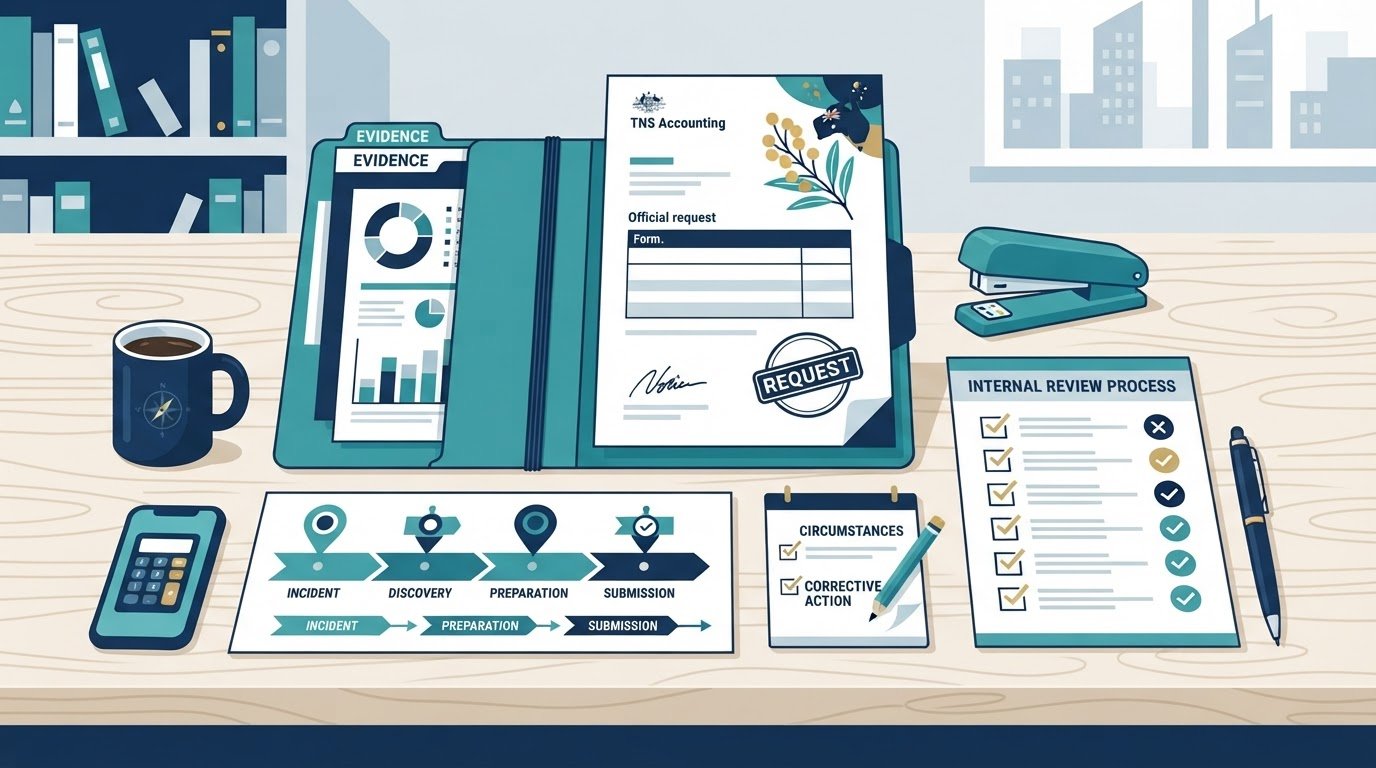
Direct answer: A business can ask the ATO to remit certain penalties or interest where its circumstances justify full or partial remission. The request should identify the charge, explain what caused the failure, describe corrective steps and attach relevant evidence. Remission is discretionary, not automatic.
This is general information for Australian small-business owners, with context for Epping, Melbourne and Victoria. It is not personal tax or legal advice. A registered tax agent or lawyer may be needed for the facts.
Which ATO charges may be covered by the current request process?
The ATO’s current process covers requests for remission of general interest charge, shortfall interest charge and failure-to-lodge penalties. Other penalties can have different rules. Read the notice first and use the current ATO instructions for the specific charge.
What should a remission request explain?
State the taxpayer or entity, charge type, relevant period and amount. Explain the circumstances that caused the delay or non-compliance, when they began and ended, what the business could and could not control, and the steps taken to lodge or pay. Keep the account factual and consistent with the evidence.
Which evidence can make the request clearer?
Evidence depends on the reason and may include medical or disaster documentation, correspondence, system outage records, adviser communications, proof of dates, a lodgment history and a recovery plan. Remove irrelevant sensitive information and retain a copy of everything submitted.
What should be on the remission checklist?
- Read the notice and confirm the charge and period.
- Bring overdue lodgments up to date where possible.
- Build a dated timeline of events and corrective actions.
- Collect evidence that supports each important fact.
- Use the ATO’s current form or online message channel.
- Submit a separate request where the instructions require it.
- Keep the receipt and monitor the decision.
- Seek registered advice if the amount or facts are material.
How can a business submit the request?
The ATO says businesses, including eligible sole traders, can use the relevant form through Online services for business, Online services for individuals and sole traders, or agent services. Other methods may be available in the instructions. Follow the current page because forms and channels can change.
What could this look like in practice?
Hypothetical example: A Victorian company receives a failure-to-lodge penalty after a documented system outage and staff illness. It lodges the overdue statement, prepares a dated timeline, attaches available evidence and explains the control changes made. The ATO still decides the outcome.
Where does this fit in the wider process?
Start with the live overdue BAS guide, review our BAS & Tax Return Filing service information, and visit the TNS Accounting homepage.
Frequently asked questions
Does asking for remission pause recovery action?
Do not assume it does. Check the ATO account, payment obligations and current instructions, and seek advice if recovery action is possible.
Will a good compliance history guarantee remission?
No. It may be relevant, but the ATO considers the applicable law, policy and circumstances.
Can the request be made before the overdue document is lodged?
The ATO’s policy considers whether the document remains overdue. Lodging promptly and explaining the corrective steps usually gives the request clearer context.
Which official sources were checked?
- ATO: how to request remission of interest and failure-to-lodge penalties
- ATO: failure-to-lodge-on-time penalty
- ATO: PS LA 2011/19
Published by TNS Accounting. Official sources checked 20 November 2026. ATO processes and policy can change; check the linked sources before acting.







One Response