
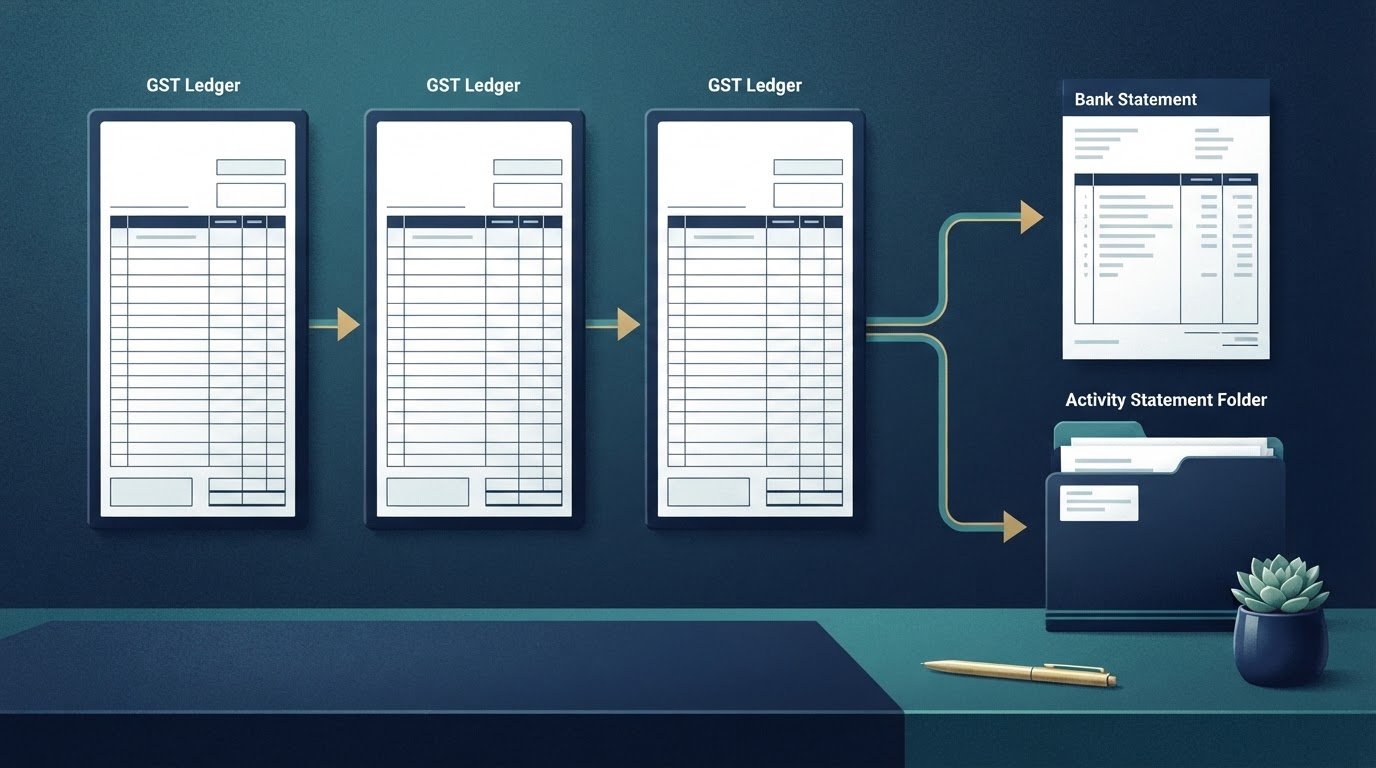
Direct answer: Reconcile GST collected and credits from source transactions to the BAS calculation, then explain the GST control-account balance using prior lodgments, payments and timing differences. Confirm the reporting basis and period before comparing totals.
General information for Australian small-business owners, with practical context for Epping, Melbourne and Victoria. Individual treatment depends on records, current rules and circumstances.
Which basis and period must agree?
The ATO says BAS amounts depend on the GST accounting basis. Cash-basis reporting follows payments or part payments; non-cash reporting generally follows the earlier relevant invoice or payment event. A report run on a different basis can create a difference without identifying the underlying error.
How should transaction totals be checked?
Review sales, purchases, tax codes, credit notes, refunds and adjustments for the period. Test unusual, private-use and GST-free or input-taxed items where relevant. Keep evidence for claimed credits and verify imports separately where their documents and treatment differ from ordinary domestic invoices.
Why might the control account differ from the BAS amount?
The ledger may include unpaid transactions, prior BAS balances, payments, corrections or entries outside the reporting period. Prepare a bridge from the opening control balance through current movements and payments to the closing balance. Do not expect it to equal one BAS figure without explaining those components.
What belongs in the GST reconciliation checklist?
- Confirm entity, period and cash or non-cash basis.
- Reconcile bank, sales and purchase records.
- Review tax-code exceptions and supporting evidence.
- Compare GST reports with ledger movements.
- Bridge prior BAS balances, payments and adjustments.
- Assess errors affecting lodged periods with the appropriate registered adviser.
- Approve the final calculation and retain the reports.
How should errors from earlier periods be handled?
Separate an error in the original reporting from a later adjustment to a transaction that was originally correct. The ATO allows some errors to be corrected in a later BAS subject to conditions; others require revision. Do not silently edit a closed period and assume the next report resolves the lodgment consequence.
What could this look like in practice?
Hypothetical example: An Epping consultancy’s GST ledger differs from its cash-basis BAS report because several invoices remain unpaid and the prior BAS payment is still in the control account. The reviewer explains those items, identifies a separate duplicate purchase and seeks the appropriate correction treatment.
Where does this fit in the wider process?
Use the live parent guide, review our service information, or visit the TNS Accounting homepage. For a related next step, read the STP and BAS reconciliation guide.
Frequently asked questions
Should GST always equal one-eleventh of bank receipts?
No. Receipts can include non-sales amounts, different tax treatments and timing items. Use the underlying transactions and applicable rules.
Does bank reconciliation complete the GST review?
No. It supports completeness but does not establish correct GST coding, attribution or credit evidence.
How long should GST evidence be kept?
ATO guidance generally requires GST records for five years, with timing and review-period rules that can affect retention.
Which official sources were checked?
Published by TNS Accounting. Official sources checked 20 November 2026. Rules and software features can change; check the linked sources before acting.







2 Responses