
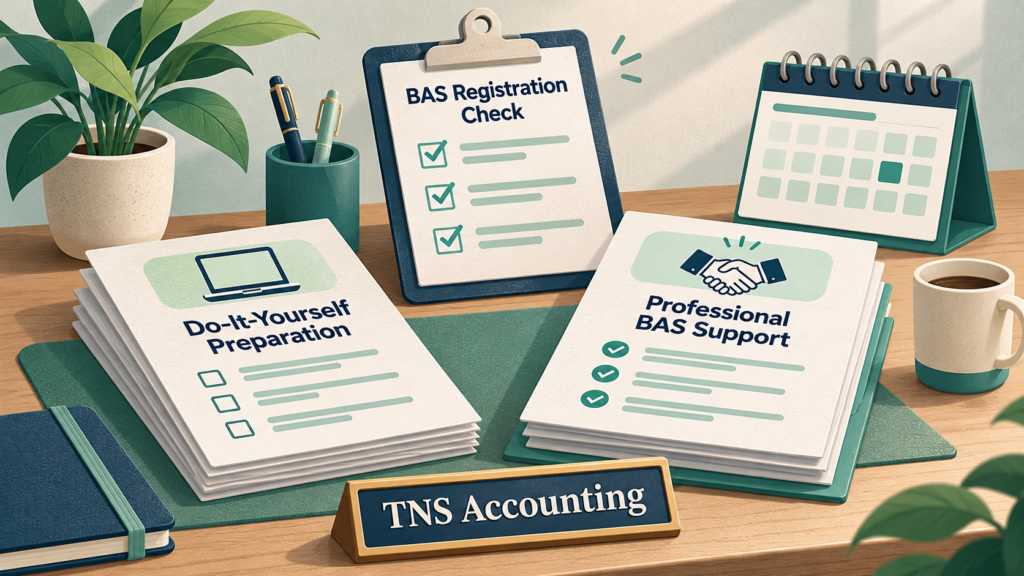
DIY BAS may suit a business with complete records, understood obligations and time to check the figures. Consider registered-agent support when treatment is uncertain, records are behind or you need help establishing reliable figures. The decision should reflect the work required, rather than a belief that software automatically prepares a correct statement.
What does preparing your own BAS involve?
You need to identify the correct entity and period, complete the books, check relevant tax treatment and reconcile the figures before lodging. The Australian Government BAS guide describes self-lodgement options and using a registered tax or BAS agent.
Write down which parts you can complete confidently and which items remain unresolved. A simple transaction count does not reveal every complication: a single unusual sale, private-use purchase or earlier correction may need attention. Our GST records review guide provides a practical starting check.
Which signs point towards professional support?
- Bank accounts or tax balances do not reconcile.
- You cannot explain the treatment of a material transaction.
- Documents are missing or several periods remain unfinished.
- Payroll withholding or other statement components are unclear.
- The person doing the work has insufficient time for review.
Support can be limited to an agreed review or cover preparation and lodgement. Specify the actual deliverable. A bookkeeper completing entries, a practitioner reviewing treatment and an authorised person lodging are different responsibilities.
What should you check about a registered practitioner?
The TPB’s consumer guidance explains checking registration and agreeing the work, timing and fees. Confirm the registered individual or entity responsible and any conditions. Clarify whether the engagement covers BAS, income tax or both; BAS registration alone does not cover all income tax work.
Expect an appropriate identity and authority process. TPB client-verification guidance distinguishes verifying identity from the ATO’s client-to-agent linking process. Use official instructions supplied through an agreed channel rather than sending login credentials in an ordinary message.
What belongs in the decision checklist?
- List the statement obligations and reporting period.
- Check the books are complete and reconciled.
- Identify treatment questions and missing evidence.
- Assess your available time and knowledge honestly.
- Obtain a written scope for any preparation, review or lodgement work.
- Agree document cut-off dates, approval and evidence of lodgement.
- Confirm who handles subsequent ATO queries and corrections.
For Epping and Melbourne owners comparing support, ask how meetings and document exchange will work. Confirm the actual service arrangements rather than relying on an advertised location alone.
How could a business choose a mixed approach?
Hypothetical example: A Melbourne consultant maintains invoices and bank reconciliations internally but is unsure about an unusual purchase. They agree a registered practitioner’s review of that item and the proposed statement before lodgement. The brief records what the owner prepares and what the practitioner checks. This illustrates a possible division of work, not a finding that a particular transaction qualifies for a credit.
What do owners ask about DIY BAS?
Can software replace an understanding of GST treatment?
No. Software uses records and settings. Review uncertain treatment before relying on the proposed figures.
Does appointing an agent mean I stop supplying records?
No. Agree what information is needed and provide complete records in time for the work.
Does using an agent automatically extend every deadline?
Do not assume so. Confirm the actual due date and any applicable arrangement with the practitioner or ATO.
Where can you prepare the handover?
Read our BAS preparation support guide, discuss the scope through BAS Tax Return Filing, or explore TNS Accounting.
Which related guides can help you prepare?
- BAS Preparation Checklist for Small Businesses
- What Should You Do When Your BAS Is Overdue?
- How Do PAYG, IAS and Other BAS Components Fit Together?
Published by TNS Accounting. Updated and sources checked 4 November 2026. General educational information; individual treatment depends on your circumstances.
Official sources: Australian Government: business activity statements; TPB: finding and using a tax practitioner; TPB: client verification.
Published by TNS Accounting
Practical accounting and bookkeeping resources for Australian small business owners. Check each guide’s sources and review date, and contact us about your business circumstances.
Popular Categories
Subscribe now and get the latest strategies straight to your inbox.
Latest Article






Accounting & Bookkeeping FAQs
Bookkeeping Services
What do TNS Accounting’s bookkeeping services include?
Our bookkeeping support covers transaction recording, expense tracking, bank reconciliation and organised financial records. We agree the work around your transaction volume, existing software and reporting needs.
How often should my business books be updated?
Weekly updates suit businesses with frequent transactions or close cash flow monitoring. Monthly bookkeeping may suit smaller operations. The right schedule keeps records useful between reporting deadlines.
Can you help if my bookkeeping has fallen behind?
Contact us to review the periods and records involved. We can discuss a catch-up plan covering missing transactions, unreconciled balances and outstanding documents before setting an ongoing schedule.
What is bank reconciliation?
Bank reconciliation compares your accounting records with bank statements. Reviewing differences helps identify missing entries, duplicate transactions, bank fees and timing issues before reports are prepared.
Is bookkeeping useful for sole traders and startups?
Yes. Clear records help sole traders and startups understand income, expenses and outstanding payments. Bookkeeping also gives your accountant organised information for preparing financial statements and tax returns.
What documents should I provide for bookkeeping?
Have bank and credit card statements, sales invoices, supplier bills, receipts and relevant payroll records ready. We will identify any additional documents needed after reviewing your business and accounting system.
Can bookkeeping help me track unpaid invoices and supplier bills?
Yes. Recording customer invoices and supplier bills creates a clearer picture of amounts owed to and by your business. Regular reviews help you plan follow-ups and upcoming payments.
When should I outsource bookkeeping?
Consider outsourcing when records fall behind, reconciliation takes too much time or reports are hard to trust. A discussion with TNS Accounting can help define the support your business needs.
BAS and Tax Return Support
What is a business activity statement, or BAS?
A BAS reports applicable business taxes to the ATO, which may include GST, PAYG withholding and PAYG instalments. The sections you complete depend on your business registrations and reporting obligations.
How does organised bookkeeping help with BAS preparation?
Reconciled records make sales, purchases and tax coding easier to review. Keeping invoices and receipts available helps resolve missing information before figures are used for BAS preparation.
What records are needed to prepare a BAS?
Common records include sales invoices, purchase invoices, bank statements and relevant payroll reports. Your reporting period, GST accounting method and business activities determine the full information required.
How often does a business need to lodge BAS?
Your reporting cycle depends on your ATO arrangements. Check the activity statement and your ATO account for the applicable period and due date, or confirm these with your registered agent.
Is a BAS the same as an income tax return?
No. A BAS reports applicable activity statement obligations during the year. An income tax return reports income and other relevant information for an income year. Your business may need both.
Can you help organise records for my tax return?
TNS Accounting lists tax return support among its services. Contact us to discuss your circumstances, the records required and who will prepare and lodge the return before engaging the service.
What should I do if a BAS is overdue or contains an error?
Gather the relevant records and contact your registered tax or BAS agent promptly. The action needed depends on the reporting period, the nature of the issue and your ATO account.
Who should lodge BAS or tax returns on behalf of my business?
Use an appropriately registered tax or BAS agent for services that require registration. Before engagement, confirm the responsible practitioner, their registration and the scope of preparation, review and lodgement.
Payroll Management
What does your payroll management service cover?
Our website lists payroll processing, employee payslips, Single Touch Payroll support and superannuation support. We agree responsibilities, approval steps and payroll deadlines around your team and pay cycle.
What information is needed to set up payroll?
Employee details, tax declarations, super fund information, employment terms, pay rates and opening leave balances are typical starting points. Accurate timesheets and approved changes are also needed for each pay run.
Can payroll be processed weekly, fortnightly or monthly?
The suitable pay cycle depends on applicable employment requirements and your business arrangements. Confirm the required frequency first, then establish a payroll calendar with clear information and approval cut-offs.
What is Single Touch Payroll reporting?
Single Touch Payroll is a way of reporting salary and wage, PAYG withholding and super information to the ATO through enabled software. Reporting generally occurs on or before payday, subject to applicable exceptions.
Can payroll support include leave balances and payslips?
Payslips are part of the payroll service listed on our website. Discuss leave tracking and opening balances during setup so the software configuration matches the employee information and entitlements supplied.
How can I reduce errors in payroll processing?
Use current employee details, approved timesheets and documented pay changes. Review draft payroll reports before final approval, and reconcile payroll records regularly to identify discrepancies.
What happens when an employee starts or leaves?
Provide the relevant dates, employment details and approved payroll instructions promptly. New starters need complete setup information; departures require a review of outstanding pay and applicable leave or other entitlements.
Does outsourcing payroll remove my responsibilities as an employer?
No. Employers retain responsibilities for employee information, entitlements, payments and compliance. An agreed payroll process should clearly identify who supplies information, reviews calculations, approves pay runs and completes reporting.
Financial Statements and Reporting
What financial reports can TNS Accounting help with?
Our financial reporting services include financial statements, custom reports, cash flow analysis and performance insights. The reporting package should reflect your business structure and the decisions you need to make.
What does a profit and loss statement show?
A profit and loss statement summarises income and expenses over a period. It helps you review trading performance, compare costs and understand whether the business recorded a profit or loss.
What does a balance sheet show?
A balance sheet shows assets, liabilities and equity at a particular date. Reviewing it alongside other reports helps you understand what the business owns, owes and has invested.
How often should I review financial reports?
Monthly reporting is a useful starting point for many small businesses. Businesses facing rapid change or tight cash flow may need more frequent reviews of selected figures.
Can financial reports be tailored to my business?
Yes. Our website lists custom reporting as a service. Discuss the products, locations, projects or expense categories you want to monitor so reporting can be scoped around useful comparisons.
What is budget versus actual reporting?
It compares planned income and expenditure with recorded results. Reviewing the differences can highlight unexpected costs, slower sales or assumptions that need changing in your next budget.
Why should accounts be reconciled before reports are prepared?
Unreconciled accounts can contain missing, duplicated or incorrectly allocated entries. Reviewing balances first improves the reliability of the figures used in financial statements and management reports.
Can you help me understand the figures in my reports?
Discuss report interpretation when agreeing your service package. A useful review explains major movements, outstanding balances and cash flow trends so the figures support practical business decisions.
General Accounting
What general accounting services do you provide?
TNS Accounting lists daily bookkeeping, bank reconciliation, expense tracking and ledger management within its general accounting services. We discuss your records and reporting needs before defining the work.
What is the difference between bookkeeping and accounting?
Bookkeeping focuses on recording and organising transactions. Accounting uses those records to prepare, review and interpret financial information. The two functions work together to support reliable business reporting.
What is a general ledger?
The general ledger groups recorded transactions into accounts such as sales, expenses, assets and liabilities. Accurate ledger entries provide the foundation for reconciliations and financial reports.
What is a chart of accounts?
A chart of accounts is the list of categories used to record business transactions. A clear structure helps keep coding consistent and makes financial reports easier to understand.
How should business and personal transactions be separated?
Use separate business banking where appropriate and identify personal transactions clearly when they occur. Your accountant can explain how drawings, contributions or other owner transactions should be recorded for your structure.
Can you review transactions that have been coded incorrectly?
Contact us to discuss the records and periods involved. Reviewing source documents, transaction categories and reconciliations helps identify entries that may need correction before reports are finalised.
What is the difference between cash and accrual accounting?
Cash accounting generally records transactions when money changes hands; accrual accounting generally records income and expenses when earned or incurred. The appropriate treatment depends on the reporting purpose and applicable requirements.
How can I prepare for financial year end?
Keep records current, reconcile accounts and gather supporting documents for outstanding balances. Ask your accountant for a business-specific checklist covering items such as assets, loans, inventory and payroll.
Accounting Systems and Cloud Software
Which accounting systems does TNS Accounting work with?
Our website highlights Xero and QuickBooks alongside accounting system management. Tell us which platform you use so we can confirm the support available for your setup and requirements.
What does accounting system management involve?
Our listed services focus on account management, data accuracy, bank reconciliation and financial reporting. The scope can be discussed around how transactions enter your system and how reports are produced.
How do I choose accounting software for a small business?
Compare transaction volume, invoicing, payroll, reporting, integrations and user access requirements. Also consider subscription costs and the support needed to keep records accurate after setup.
Do bank feeds replace the need for bank reconciliation?
No. Bank feeds import transaction information, but entries still need review and matching. Reconciliation checks that recorded balances agree with statements and helps identify duplicates or missing transactions.
Can you help review my Xero or QuickBooks records?
Contact TNS Accounting with details of your software and the issues you are seeing. We can discuss an appropriate review of account coding, unreconciled transactions and reporting needs.
What should I consider before changing accounting software?
Plan the changeover date, opening balances, outstanding invoices, payroll information and historical records. Confirm the migration scope, backups and reconciliation steps before making changes.
How can cloud accounting support collaboration?
Cloud software lets authorised users work with a shared set of financial records. Defined access roles and consistent document handling can make it easier for owners, bookkeepers and accountants to collaborate.
Should I share my accounting software password with a bookkeeper?
Use the software’s invitation and user-permission features where available. Give each person their own access and suitable permissions, enable multi-factor authentication and review access when responsibilities change.
Cash Flow and Accounts Management
How can bookkeeping improve cash flow visibility?
Current records show incoming receipts, unpaid invoices, supplier bills and other commitments. Reviewing this information helps you understand near-term cash needs and spot issues earlier.
Why can a profitable business still run short of cash?
Profit and available cash measure different things. Unpaid customer invoices, loan repayments, equipment purchases and the timing of supplier payments can leave less cash available than profit figures suggest.
What is a cash flow forecast?
A cash flow forecast estimates money expected to come in and go out over a future period. It helps identify potential shortfalls and supports planning for upcoming commitments.
How often should customer debts be reviewed?
Review outstanding invoices regularly, with closer attention when cash is tight or overdue balances are growing. A weekly review can help establish consistent follow-up and identify disputed invoices.
What is an accounts receivable ageing report?
It groups unpaid customer invoices by how long they have been outstanding. This helps prioritise follow-up and shows whether older debts are becoming a larger share of amounts owed.
How can I keep supplier payments organised?
Record bills promptly, check approval details and review due dates alongside available cash. A planned payment schedule helps reduce missed bills and unexpected pressure on the business bank balance.
Can financial reporting help identify rising business costs?
Yes. Comparing expenses over time can highlight changes in overheads and trading costs. Consistent account coding makes the comparison more useful and helps you investigate significant movements.
Can you help analyse cash flow and business performance?
Cash flow analysis and performance insights are listed within TNS Accounting’s reporting services. Discuss your priorities so the agreed reports focus on the balances and trends most useful to your business.
Working with TNS Accounting
Where is TNS Accounting located?
Our listed address is 5 Demeter Street, Epping, Victoria 3076. Contact us before visiting to confirm arrangements and discuss the accounting or bookkeeping support you need.
What types of businesses do you support?
Our website describes support for Australian businesses, including startups, sole traders and growing small businesses. Tell us about your structure, industry and current systems so we can discuss a suitable scope.
How much do accounting and bookkeeping services cost?
Pricing depends on transaction volume, the condition of your records, payroll needs and reporting requirements. Contact TNS Accounting for a quote based on the services and frequency your business needs.
How do I request a consultation?
Use our contact page, email info@tnsaccounting.com.au or call +61 479 044 331. Share a brief outline of your business, current software and the help you are looking for.
What should I prepare for the first discussion?
Have your business structure, accounting software, approximate monthly transaction volume and employee numbers ready. Mention outstanding reporting periods and any issues with records, payroll or cash flow.
Can I discuss combining bookkeeping, payroll and reporting?
Yes. These services are listed on our website. We can discuss how they fit together and clarify the tasks, information requirements and review schedule within your proposed package.
What should I check when moving from another bookkeeper?
Confirm the handover date, completed reporting periods, reconciled balances and access arrangements. Arrange the transfer of relevant records and clarify responsibility for outstanding work before the changeover.
How do I get a service package that suits my business?
Explain what you handle internally and where support is needed. Agree the deliverables, frequency, responsibilities and fees before work starts, and review the scope as your business changes.
