
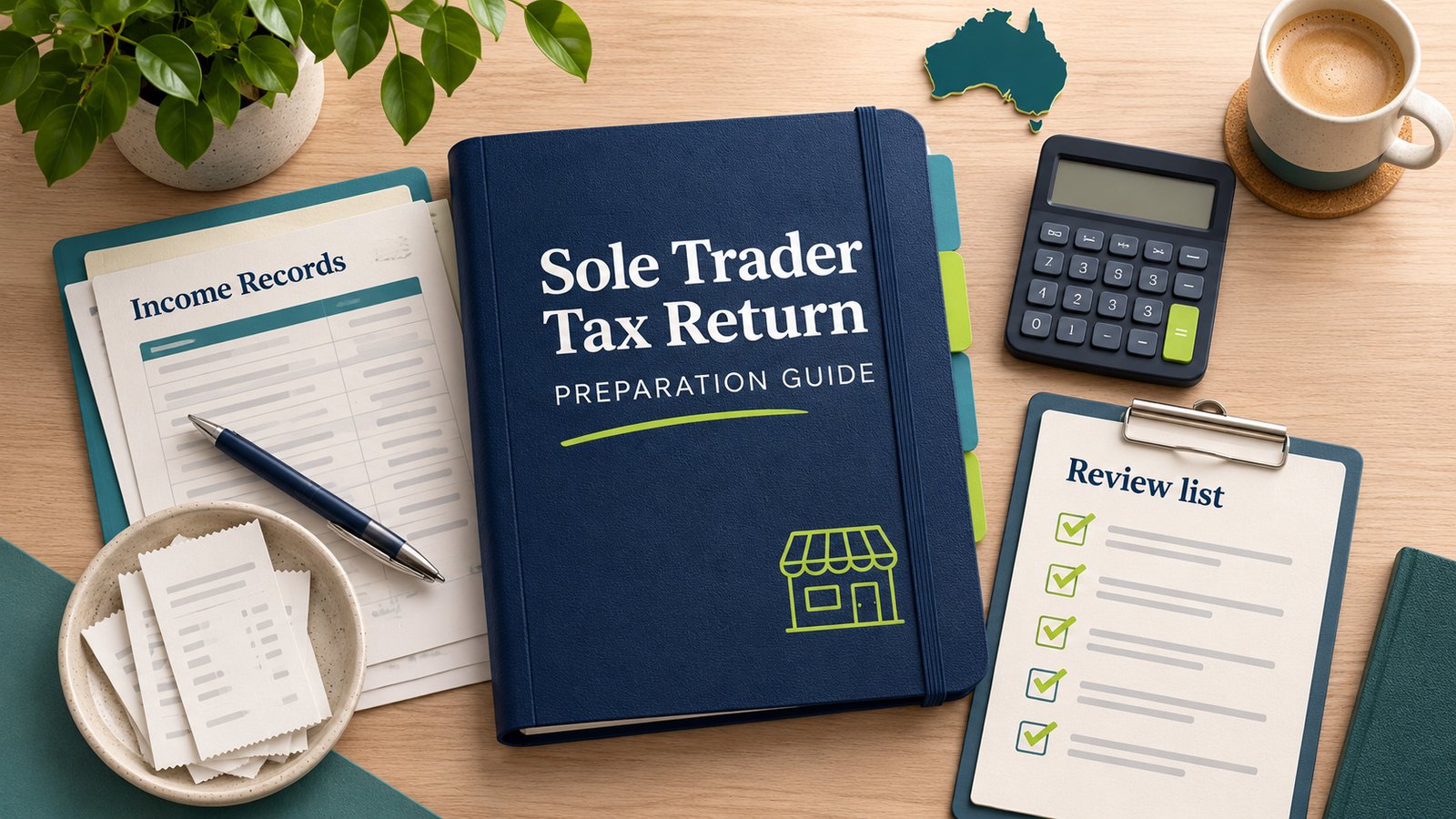
A sole trader reports business income and deductions in the individual tax return rather than lodging a separate business income tax return. Start with reconciled sales, expense evidence, asset records and private-use adjustments; then check that the figures agree to bank, GST and payroll records.
Which records should be ready?
Prepare sales invoices and platform summaries, bank and card statements, supplier bills, payroll and super records, motor vehicle or home-based business evidence, asset purchases and loan statements. Separate business and private amounts. A bank feed is useful, but it is not a substitute for the underlying evidence.
How should income be checked?
Reconcile deposits and sales systems, then explain transfers, loans, owner contributions and refunds so they are not mistaken for sales. Compare the final income figure with activity statements where relevant and keep a note for timing differences.
How should deductions be reviewed?
Claim only costs connected with earning assessable business income, keep the required records and apportion mixed-use costs. Capital purchases may need a depreciation treatment rather than an immediate deduction. Current rules and thresholds should be checked for the relevant income year.
When is professional help useful?
Ask a registered tax practitioner when records are incomplete, business and private spending are mixed, an asset has been sold, prior returns may be wrong or the tax treatment is uncertain. Verify registration on the TPB register.
What practical checklist should you use?
- Reconcile business bank and card accounts
- Match sales to invoices and payment platforms
- Collect receipts and asset purchase documents
- Record business-use percentages and calculation methods
- Compare GST and payroll records with the accounts
- List unresolved items for review
What does a simple example show?
Hypothetical example: An Epping sole trader receives customer payments into two accounts and also transfers personal savings into the business account. The owner reconciles both accounts and labels the personal transfer as a contribution, not sales. The example is illustrative and is not a client result.
Frequently asked questions
Does a sole trader lodge a separate company return?
No. Business income and deductions are generally reported through the individual tax return, with the relevant business schedules.
Can bank statements replace receipts?
A bank entry shows payment but may not prove what was bought or its business purpose. Keep invoices and other supporting evidence.
How long should records be kept?
ATO retention periods vary by record and circumstance. Check the current ATO guidance for the relevant record and transaction.
Where can you continue?
Use the live parent guide, review the relevant TNS Accounting service, or visit TNS Accounting for the wider resource library.
Official sources checked
Published by TNS Accounting. Sources checked 14 November 2026. General educational information only; treatment depends on current law, software, records and individual circumstances.







One Response