
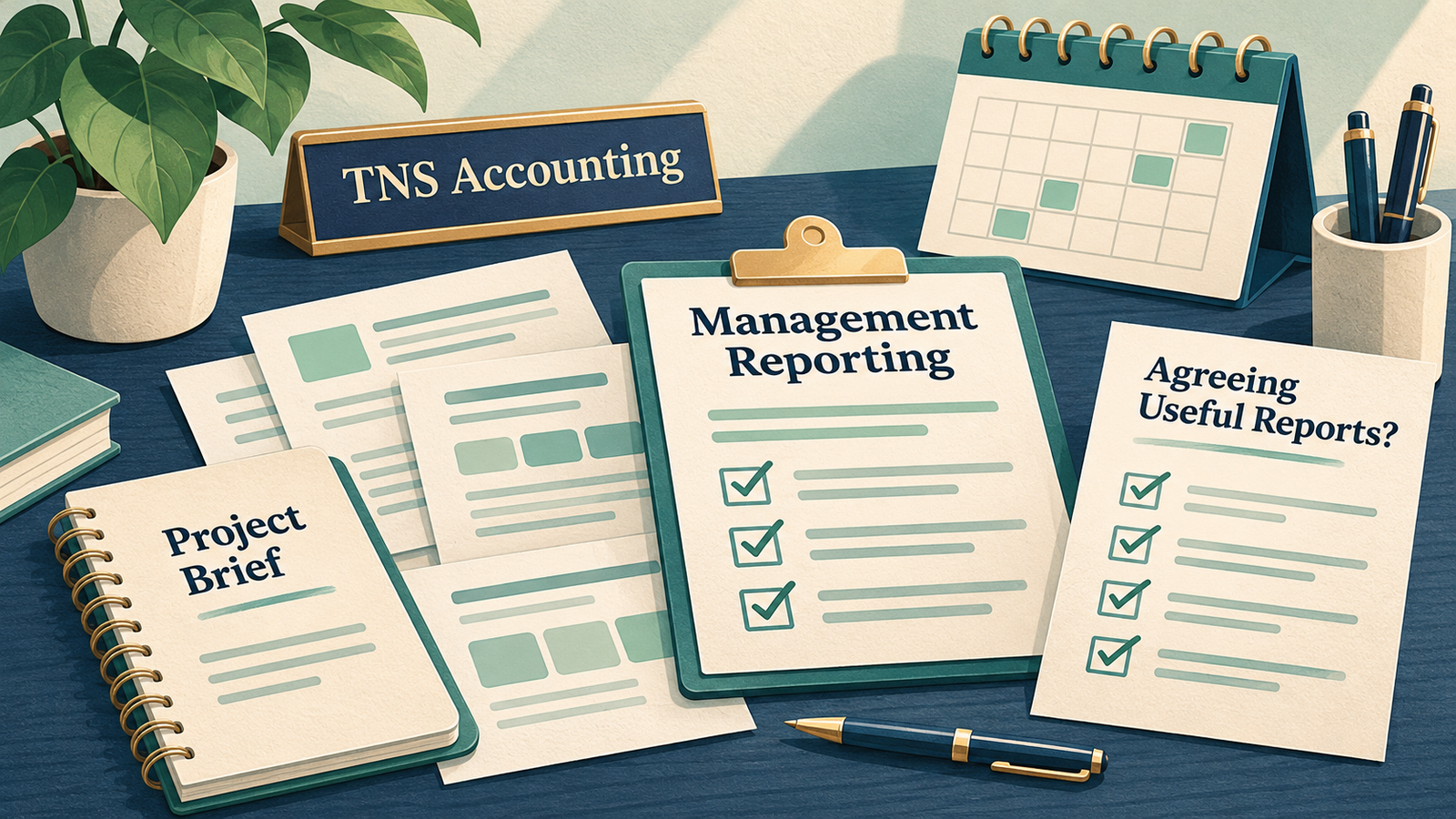
Tell the bookkeeper which decisions the reports must support, then agree the data, definitions and delivery date. A reporting brief should make it clear how the owner will use the information. Asking only for a monthly dashboard can produce attractive totals without answering the business’s real questions.
Which decisions should the brief start with?
Write down two or three recurring decisions: whether to follow up older debts, change a product price, control an overhead or delay a discretionary purchase. For each, identify who decides and when the information is needed.
The government financial health guide explains the roles of the balance sheet, profit and loss, cash flow and budget. Use that foundation to select relevant information rather than requesting every available report. Our monthly financial reports guide explains the main reports.
What information must the bookkeeper have?
List the accounting file, bank reconciliations, outstanding invoices and bills, payroll records where relevant, and operational data needed for the chosen measures. Agree who supplies missing documents and when the reporting period closes.
A Melbourne business comparing margins by job may need reliable job coding and recorded labour time. A retailer reviewing stock may need trustworthy inventory information. If those inputs are missing, label the limitation and agree how to improve the records before treating the result as reliable.
How should you define the measures and comparisons?
Record the calculation, source, period and treatment of unusual items for each measure. Specify whether a comparison uses the previous month, the same month last year or an approved budget. Keep definitions consistent between reporting periods and explain changes.
The government budgeting guide recommends comparing actual results with the budget and investigating differences. Add a short commentary request: what moved, what evidence explains it and which action is proposed. A variance percentage without context may not support a useful decision.
What should your reporting-brief checklist include?
- Decisions, intended readers and meeting dates.
- Reports and measures, with written definitions.
- Entities, periods and business segments covered.
- Required source records and document cut-off dates.
- Reconciliation and review responsibilities.
- Delivery format, commentary and an exception list.
- How corrections or late information will be identified.
- A review date to check whether the pack is being used.
Agree what is outside scope, such as tax-return preparation, statutory reporting or assurance work. A management pack should not imply an audit or independent review that has not occurred.
What could a useful brief look like?
Hypothetical example: An Epping service business wants to understand why larger jobs are not improving cash. Its brief requests job-level margin information where supported, aged customer balances and a short cash forecast. It names the person responsible for job coding and sets a monthly discussion date. Missing time records are disclosed rather than replaced with unexplained estimates. This is an invented reporting arrangement, not a client outcome.
What do owners ask about reporting briefs?
Should I request a dashboard or a spreadsheet?
Choose a format the intended reader can use. The definitions, source quality and review process matter more than the display.
Can reports be delivered before all records are complete?
Agree whether a clearly labelled provisional pack is useful, what is missing and when the final figures will replace it. Do not silently mix provisional and final information.
How do I know whether the pack is useful?
After several reporting cycles, check which decisions it supported. Remove unused measures and improve information gaps that repeatedly delay action.
Where can you strengthen the supporting records?
The government record-keeping guide explains the evidence foundation. Use our month-end close guide, discuss the brief through Bookkeeping & Financial Reporting, and explore TNS Accounting.
Which related guides can help you prepare?
- Management Reporting vs Financial Reporting
- Budget vs Actual Reporting Explained
- What Should Be Included in a Monthly Financial Report?
Published by TNS Accounting. Updated and sources checked 4 November 2026. General educational information; individual treatment depends on your circumstances.
Official sources: Australian Government: financial health review; Australian Government: create a budget; Australian Government: record keeping.
Turn the brief into a repeatable close process with our monthly management reporting timetable guide covering cut-offs, reviews and action dates.







One Response