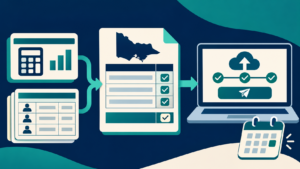
Direct answer: GST-registered businesses with turnover below the current threshold generally report G1, 1A and 1B under Simpler BAS, but other obligations such as PAYG withholding still appear where applicable.
This guide gives general information for Australian small businesses, with practical context for Epping, Melbourne and Victoria. It is not personal tax, legal or employment advice.
What should be confirmed first?
GST-registered businesses with turnover below the current threshold generally report G1, 1A and 1B under Simpler BAS, but other obligations such as PAYG withholding still appear where applicable.
Which records and controls matter?
Maintain full sales, purchase, GST and tax-invoice records even though fewer GST labels are reported. Reconcile bank, receivables and payables to the GST report.
What should be reviewed before relying on the result?
Confirm turnover, accounting basis, reporting cycle and any WET, LCT or fuel tax credit labels before lodging. Simpler reporting does not reduce record-keeping duties.
Practical checklist
- Confirm the legal entity and reporting period
- Collect complete source records
- Assign preparation, approval and review roles
- Reconcile the result to independent evidence
- Record exceptions and correction reasons
- Set the next review date
Hypothetical example
Hypothetical example: A hypothetical small retailer reports the three Simpler BAS GST labels while separately reporting PAYG withholding for employees.
Where can you get related help?
Read the live parent guide, review our BAS Tax Return Filing service information, or visit the TNS Accounting homepage.
Frequently asked questions
Can software complete this process automatically?
Software can assist with capture, calculation and reporting, but the business must still verify source records, settings, exceptions and approvals.
When should professional advice be sought?
Seek suitable advice when the facts are uncertain, a correction affects a lodged return or employee entitlement, or the decision changes legal or tax obligations.
Official sources
Published by TNS Accounting. Official sources checked 17 November 2026. Rules, rates and software features can change; check the linked sources before acting.