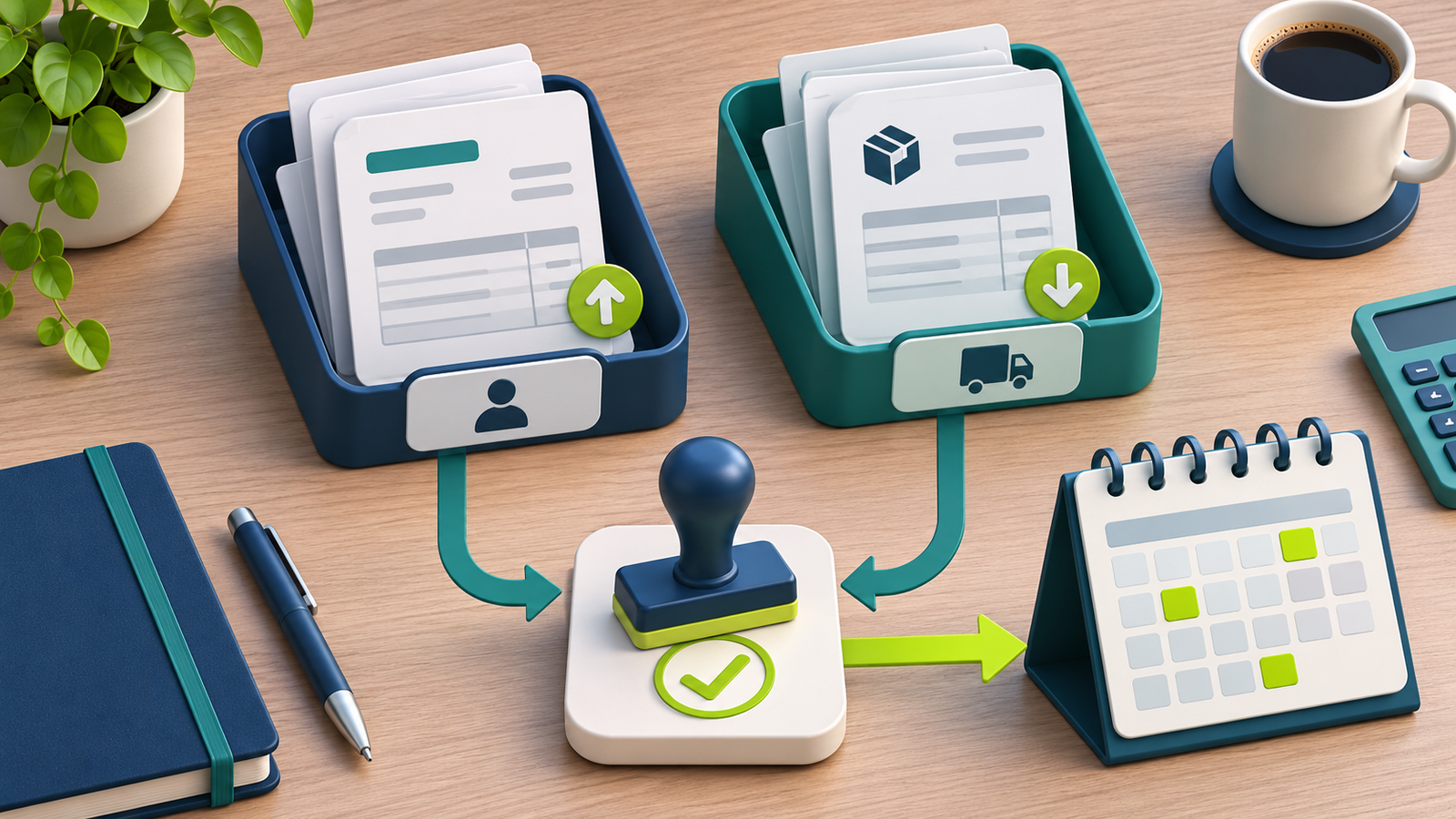
Use separate, documented workflows for customer invoices and supplier bills: verify contact and tax details, attach source documents, approve changes, match payments and review overdue or duplicate items. Automation should reduce data entry without removing review.
What makes an invoice reliable?
Use the correct customer, date, description, GST treatment and payment terms. Number invoices consistently and control credit notes. Before sending, check bank details and any change to them through a trusted channel.
How should supplier bills be entered?
Enter the supplier, invoice number, date, due date, amount, GST and account coding from the source document. Attach the bill, identify duplicates and record who approved the purchase and payment.
What should be reviewed each week?
Review overdue customer invoices, bills due soon, unapplied payments, draft items, duplicate invoice numbers and changes to supplier bank details. Reconcile the bank so paid and unpaid reports stay meaningful.
Where can automation go wrong?
Repeating rules and data capture can copy an old code or tax rate onto a new transaction. Set materiality thresholds, review exceptions and test integrations after software or workflow changes.
What practical checklist should you use?
- Verify contact and bank-detail changes
- Attach each invoice or supplier bill
- Use clear due dates and approval owners
- Review credits and duplicate numbers
- Match receipts and payments promptly
- Reconcile bank accounts before relying on reports
What does a simple example show?
Hypothetical example: An Epping retailer receives a supplier email with new bank details. The bookkeeper pauses the bill payment, verifies the change using the supplier’s known phone number and documents the approval. No client result is implied.
Frequently asked questions
Should draft bills be included in cash planning?
They may represent real commitments, but confirm validity and approval before treating them as payable.
Can Xero prevent every duplicate?
Software can warn about some duplicates, but changes in supplier names or invoice numbers can bypass simple checks.
How often should overdue invoices be reviewed?
Use a frequency that supports action; many small businesses review operational receivables weekly and perform a fuller month-end review.
Where can you continue?
Use the live parent guide, review the relevant TNS Accounting service, or visit TNS Accounting for the wider resource library.
Official sources checked
Published by TNS Accounting. Sources checked 14 November 2026. General educational information only; treatment depends on current law, software, records and individual circumstances.