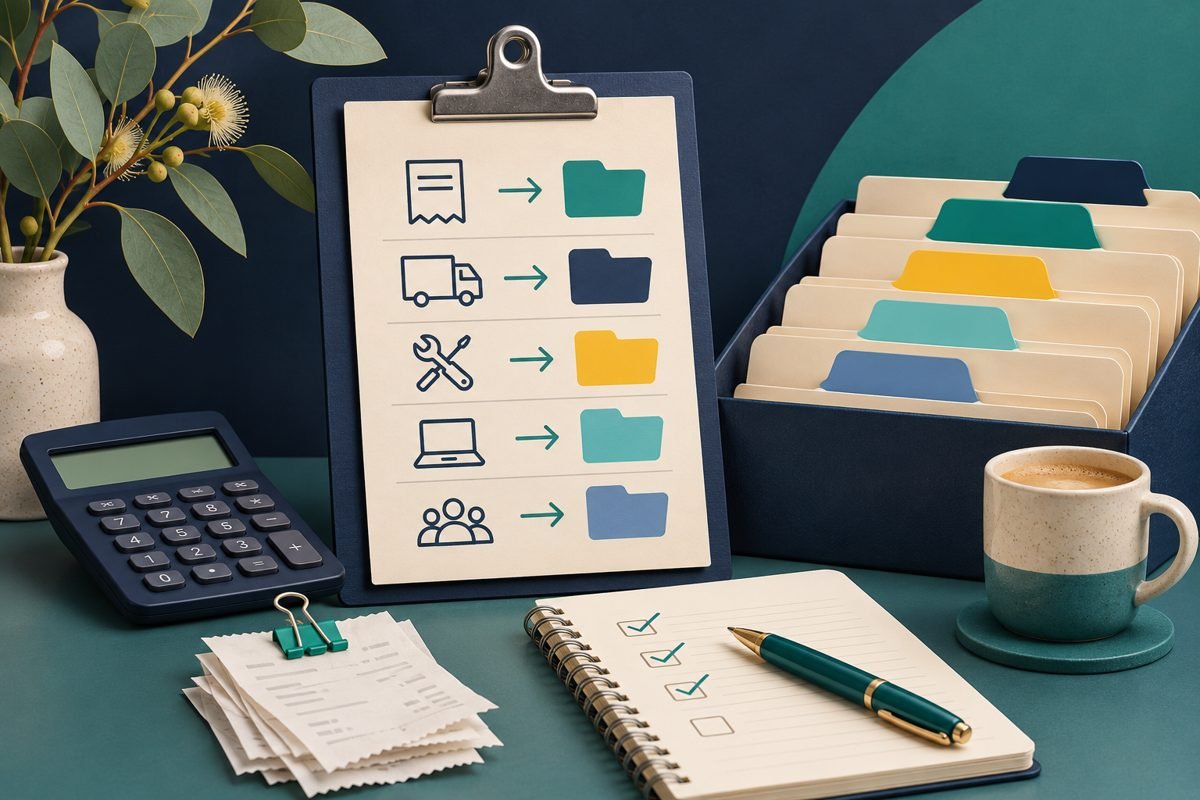
Give the bookkeeper examples of common bills and agree when to ask before coding them. Use a short approved guide for repeat suppliers and leave judgement calls for review.
Which examples should be covered?
Include common expense categories, purchases requiring department codes and payments that could be assets. Identify bills that need a GST or tax review before using a recurring code.
How should the guide be maintained?
Record approved changes and the start date. Review a small sample after changing the guide and update any recurring bank rules affected by the change.
What does this look like in practice?
Hypothetical example. A supplier invoices both cleaning supplies and equipment. The bookkeeper uses separate lines and asks the owner to clarify an unfamiliar equipment purchase.
What should you check?
- Provide sample bills
- Write down exception rules
- Review a sample after updates
Frequently asked questions
Should every bill from one supplier use the same code?
Check what was bought. A supplier can issue bills for several different purposes.
For a broader view, read What Should Small Business Bookkeeping Services Include?. See also How Can You Catch Up and Keep Business Books Accurate?. Explore Bookkeeping services or visit the TNS Accounting homepage.
Sources
Published by TNS Accounting. Sources checked 13 November 2026.